Sewer Replacement Testing Before Backfill: What to Verify
October 5, 2026
North Texas cast iron sewer planning
Sewer Replacement Testing Before Backfill: What to Verify
Sewer replacement testing before backfill is a decision checkpoint, not a ceremonial final step. The approved test, visible joints, grade, supports, branch connections, cleanouts, transitions and inspection status should be documented before new work is covered.
Summary
sewer replacement testing before backfill: the short version
Sewer replacement testing before backfill is a decision checkpoint, not a ceremonial final step. The approved test, visible joints, grade, supports, branch connections, cleanouts, transitions and inspection status should be documented before new work is covered.
The correct decision depends on the actual condition, grade, depth, access, branch connections, layout and local requirements. This guide is educational; it does not claim that a particular home has been inspected or that one method fits every property.
Start with the decision
Why sewer replacement testing before backfill deserves a written plan
Sewer replacement testing before backfill is a decision checkpoint, not a ceremonial final step. The approved test, visible joints, grade, supports, branch connections, cleanouts, transitions and inspection status should be documented before new work is covered.
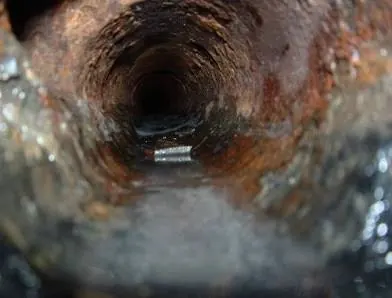
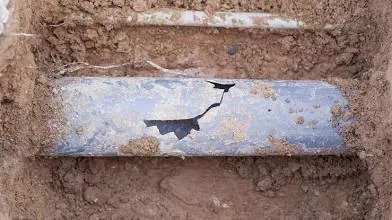
Older cast iron systems often contain more than one material, repair generation or branch layout. A surface symptom may be far from the source, and a camera image may show only the accessible interior at that moment. Planning should separate what is observed, what is inferred and what remains unknown.
Written scope prevents a broad phrase from carrying too much meaning. It should identify the route, approximate limits, access points, fixtures and branches, new materials, transitions, inspection and testing steps, backfill, restoration, exclusions and the procedure for concealed conditions.
- New piping, fittings or couplings are about to be concealed
- A required inspection or defined test has not been documented
- Branch connections were changed during the work
- Temporary supports or open trenches remain
- Restoration is scheduled before closeout evidence is assembled
A repeatable sequence
How to plan sewer replacement testing before backfill
Define the question
Confirm the approved scope, permit status and inspection sequence. Document the result before moving to the next irreversible step.
Map the system
Expose and identify every new joint, transition, branch and cleanout in the work area. Document the result before moving to the next irreversible step.
Choose the evidence
Verify pipe support, route and intended drainage before concealment. Document the result before moving to the next irreversible step.
Coordinate the work
Perform the test required for the project and jurisdiction under qualified supervision. Document the result before moving to the next irreversible step.
Verify and preserve records
Record results, corrections, approvals and photographs before backfill. Document the result before moving to the next irreversible step.
A useful plan moves from the least invasive evidence to the decision that evidence can actually support. Camera footage, locating, depth estimates, controlled flow, defined-section testing, excavation exposure and local inspection each answer different questions. They should not be treated as interchangeable.
Homeowners should ask how the recommended step changes the decision. If a test cannot alter the scope, timing or method, it may not be the next useful test. If a result is essential before concrete, soil or finishes cover the work, that hold point belongs in the written schedule.
Midpoint decision
Do not approve hidden work from a title alone.
Ask for the evidence, access plan, branch limits, testing, inspection, backfill and restoration responsibilities in writing.
Compare methods
sewer replacement testing before backfill: compare what each approach answers
| Approach | Useful role | Decision rule |
|---|---|---|
| Focused verification | Visual joint review | Use only when the observed condition, access, grade, depth, branches, layout and local requirements support it. |
| Defined repair step | Controlled-flow verification | Use only when the observed condition, access, grade, depth, branches, layout and local requirements support it. |
| Coordinated system step | Defined-section water or air test when approved | Use only when the observed condition, access, grade, depth, branches, layout and local requirements support it. |
| Broader project decision | Camera review after the line is placed in service | Use only when the observed condition, access, grade, depth, branches, layout and local requirements support it. |
The least invasive method is not automatically the best, and the largest scope is not automatically the most durable. The method must fit the defect, remaining pipe, slope, fixture layout, access, utilities and required inspection. When a proposal skips those connections, request clarification before work begins.
Targeted work may be appropriate when a confined defect and sound adjoining material are documented. Broader replacement or rerouting may be appropriate when failure is continuous, access is poor, grade is wrong, branches are complex or repeated localized work would leave substantial risk. Lining and bursting are not universal answers; host-pipe condition, deformation, branches, offsets and access can limit them.
No unsupported averages
Cost factors for sewer replacement testing before backfill
A responsible estimate follows the actual scope. It should state assumptions and exclusions instead of relying on a price per foot that ignores access, connections, depth, testing and restoration.
| Factor | Why it changes the scope |
|---|---|
| Length and number of new connections | This can change labor, access, materials, coordination, inspection, backfill or restoration. It should be confirmed before a firm scope is accepted. |
| Interior, tunnel or exterior access | This can change labor, access, materials, coordination, inspection, backfill or restoration. It should be confirmed before a firm scope is accepted. |
| Local inspection and testing requirements | This can change labor, access, materials, coordination, inspection, backfill or restoration. It should be confirmed before a firm scope is accepted. |
| Need to correct grade or support before concealment | This can change labor, access, materials, coordination, inspection, backfill or restoration. It should be confirmed before a firm scope is accepted. |
| Backfill, compaction and restoration coordination | This can change labor, access, materials, coordination, inspection, backfill or restoration. It should be confirmed before a firm scope is accepted. |
Other drivers may include interior protection, concrete and flooring, excavation equipment, tunneling, utility conflicts, haul-off, permits, inspections, temporary service, compaction, landscaping and hardscape. A change-order process should define how concealed conditions are documented and approved before extra work proceeds.
Know the boundary
Inspection limitations for sewer replacement testing before backfill
No single test proves every part of a sewer system will remain problem-free. A camera does not verify every exterior joint, and a pressure or water test does not describe future soil movement or maintenance.
A camera documents the reachable interior view; buildup, water, turns, branches and access can obstruct it. A locator estimates route and depth from signal and access. Photographs show visible conditions, not hidden soil support. Testing applies to the section, method and conditions actually tested.
Reports should name those boundaries. “No defect found” is different from “every component verified.” If the evidence is incomplete, the scope should either address that uncertainty or include a defined next step instead of presenting an assumption as a guarantee.
Model codes are not automatically the local rule. The city or other authority having jurisdiction determines the adopted edition, amendments, permits, test and inspection process. Qualified project leadership should confirm requirements for the specific address and scope.
Dallas–Fort Worth service area
Cast iron sewer planning across North Texas
CISRS serves Plano, Richardson, Garland, Allen, Dallas, McKinney, Las Colinas/Irving, Fort Worth and surrounding Dallas–Fort Worth communities. City pages provide local service context; they do not replace address-specific permit and inspection confirmation.
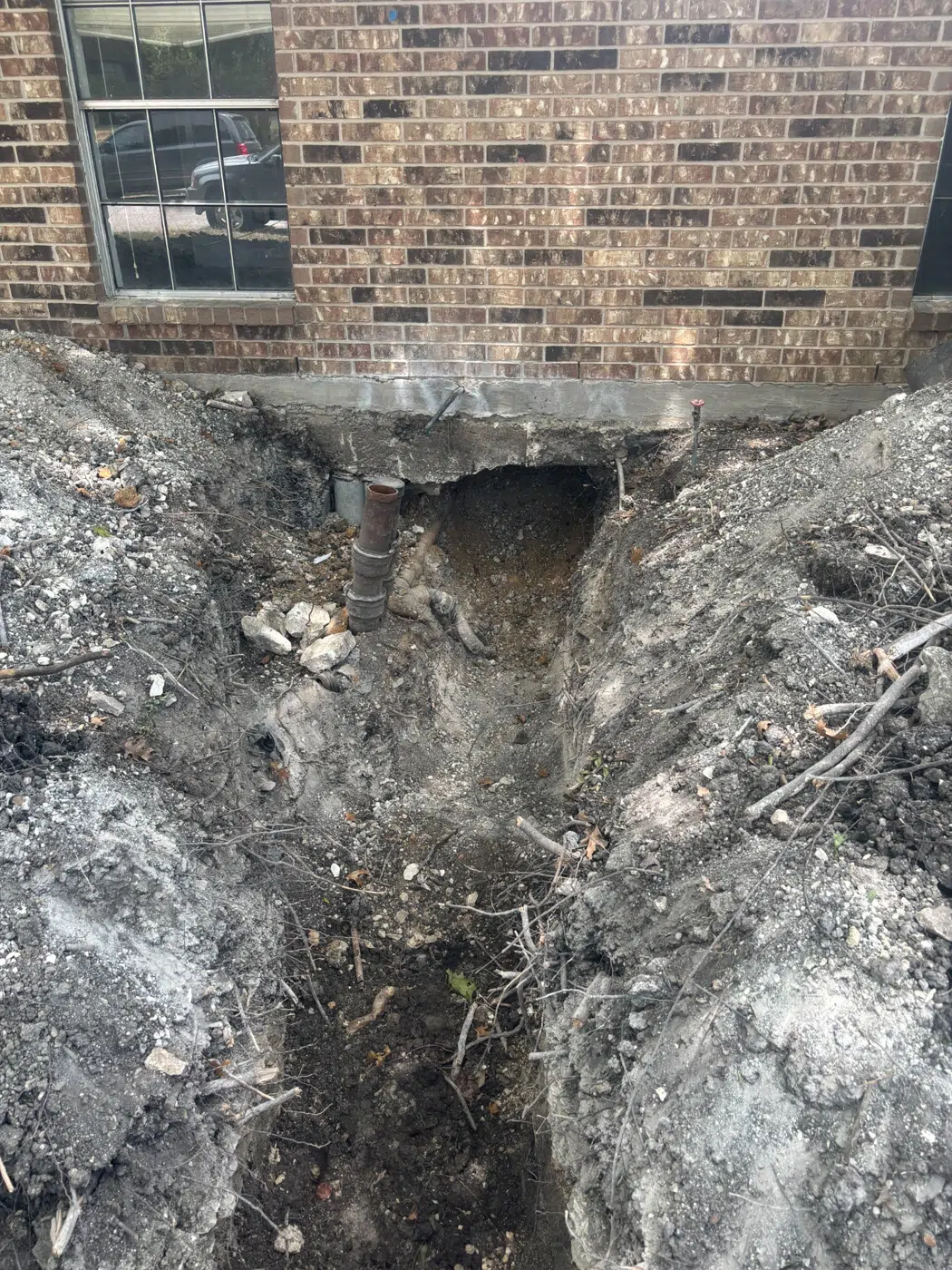
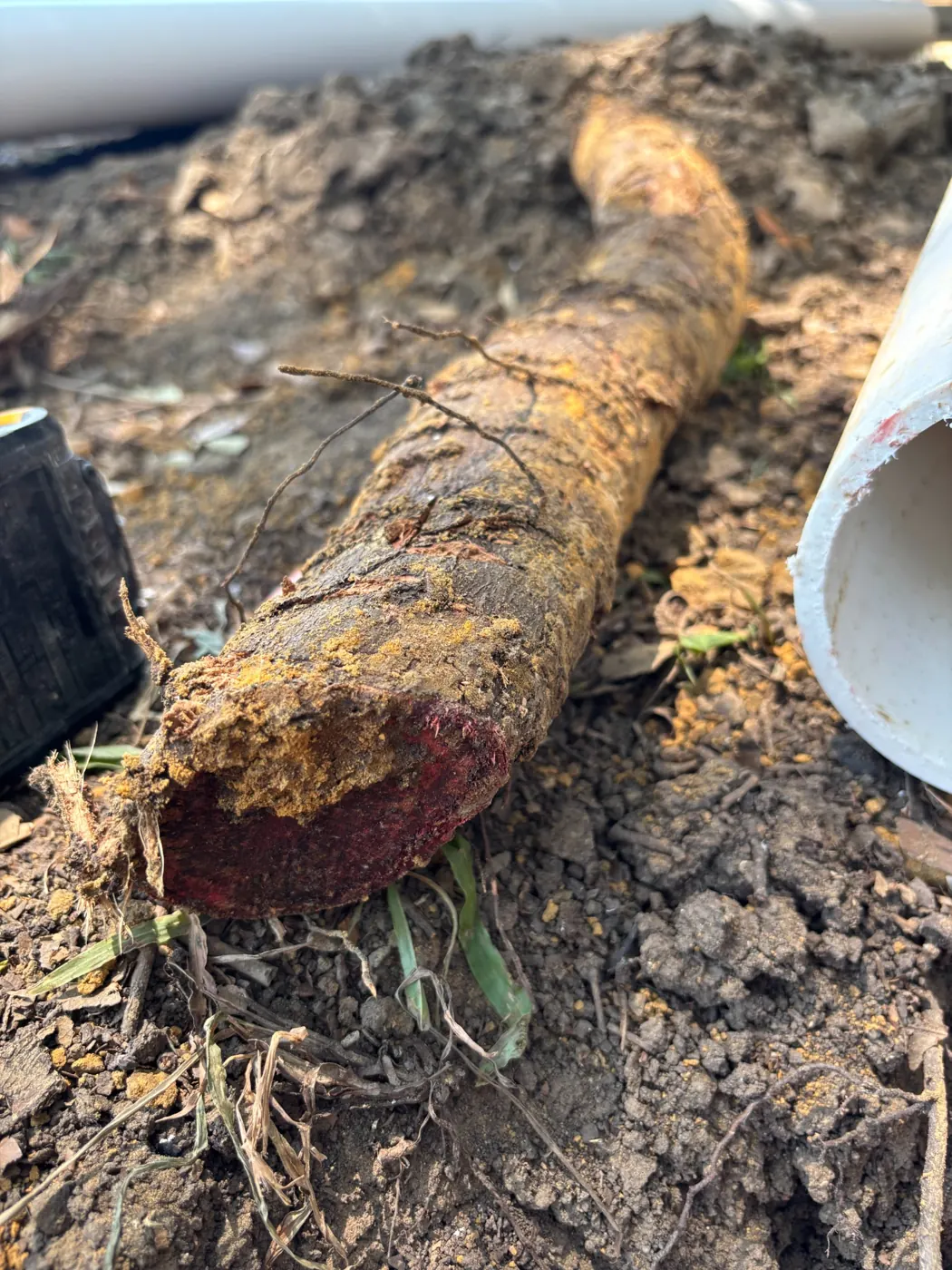
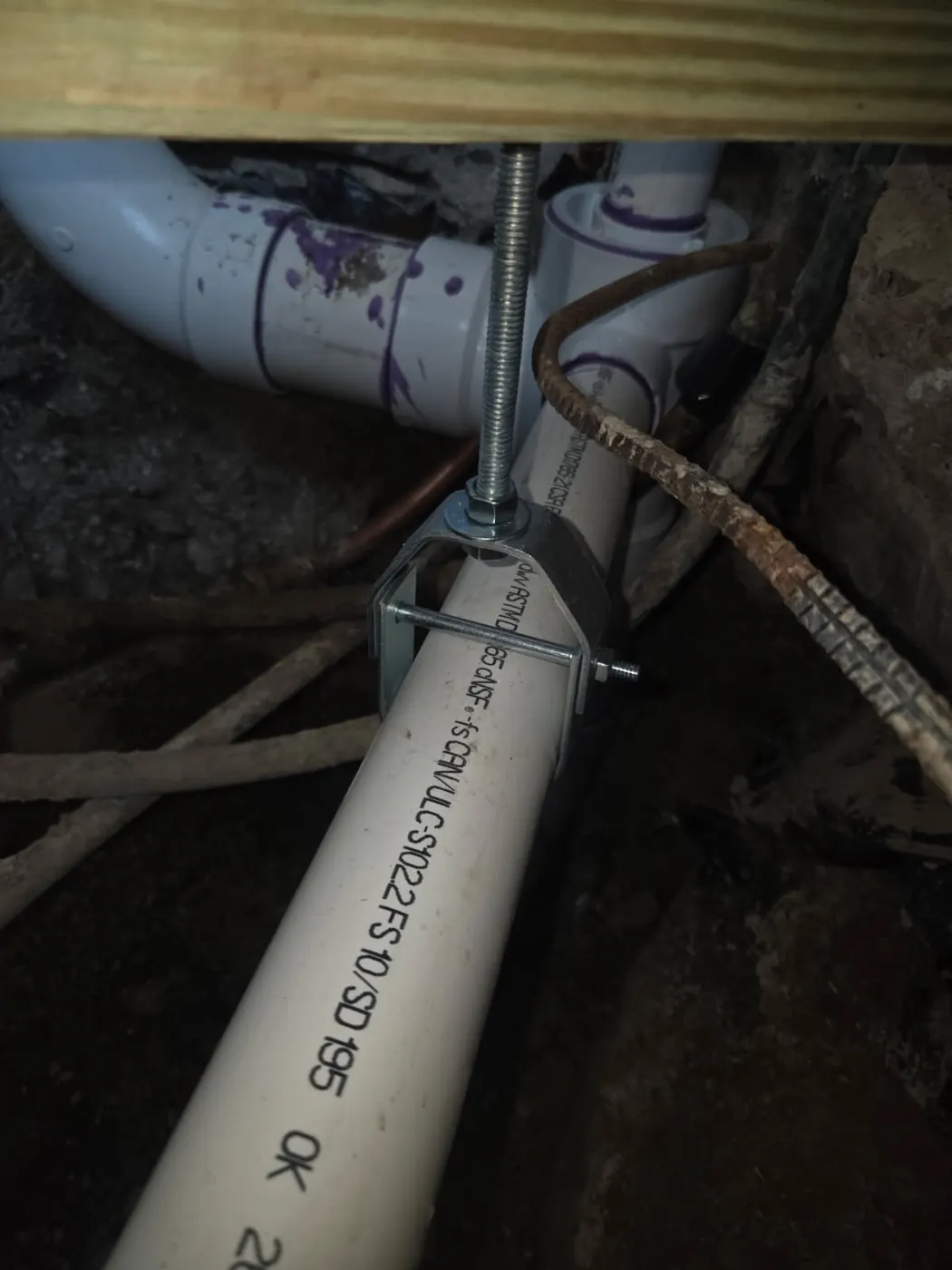
Start with the CISRS Resources center, then call or text 972-333-5448 with the affected fixtures, backup history, available video and property city. Existing homepage field photos in this article illustrate process steps and are not presented as work from the reader’s property.
General primary references include the Texas State Board of Plumbing Examiners laws and rules and Texas 811 for utility-damage-prevention information. Local adoption and project requirements still must be confirmed.
Closeout checklist
What a complete sewer replacement testing before backfill record should contain
A useful closeout file should let a future owner, plumber, inspector or contractor understand what was found, what changed and what remains. Keep the original complaint, camera videos, locate markings, depth estimates, photographs, written scope, approved changes, inspection results, test records, invoices and as-built sketch together. Name files by date and location instead of leaving evidence in an unlabeled text thread.
The record should distinguish new pipe from retained pipe. It should identify every known transition, branch reconnection, cleanout and access point affected by the project. If a portion could not be viewed or tested, state that limitation. If restoration was performed under a separate contract, keep that scope and warranty separate from the sewer work so later questions can be directed to the responsible party.
Before final acceptance, walk through the route and compare the finished condition with the written scope. Confirm that required inspections are complete, access points remain usable, cleanout caps are secure, temporary protection is removed and the work area is safe. Ask how the final verification was performed and what conditions could not be reproduced during the visit.
Good documentation does not promise that an underground system will never need service. It reduces uncertainty. It also makes later cleaning, camera inspection, remodeling, foundation work and property transfer more efficient because the next professional can begin with evidence instead of reconstructing the entire history.
- Scope and drawing match the installed work.
- Active, retained and abandoned piping are clearly labeled.
- Required test and inspection results are attached.
- Photographs show route, joints, branches, supports and access before concealment.
- Limitations, exclusions, maintenance and warranty contacts are stated.
Frequently asked questions
sewer replacement testing before backfill FAQs
Can backfill begin before inspection?
That depends on the project and local requirements. Covering work too early can prevent inspection of joints, supports and corrections, so the approved sequence should be confirmed before concealment.
Does a camera replace required testing?
Not automatically. A camera documents the reachable interior view; it may complement but does not necessarily replace a required test or inspection.
What should photographs show?
Useful records identify the route, joints, branches, transitions, supports, cleanouts and test setup with enough context to understand location.
Who decides which test applies?
The authority having jurisdiction, approved plans, permit scope, applicable adopted requirements and qualified project leadership determine the test.
What if a test fails?
The failure should be isolated, corrected and retested before concealment. The record should distinguish the failed condition from the passing retest.
Is flowing water enough?
Flow is useful evidence but may not answer every question about joints, grade or watertightness. The verification method must fit the required decision.
What should the final record include?
Keep the approved scope, inspection outcome, test result, photographs, changes, retained-pipe limits and restoration notes.
Plan the work before the pipe is covered or the floor is restored.
Call or text CISRS to discuss the property, available evidence and the next useful step.