Cast Iron Sewer Replacement When Cleanouts Are Missing
October 9, 2026
EDUCATIONAL PLANNING GUIDE
Cast Iron Sewer Replacement When Cleanouts Are Missing
When a property has no usable cleanout, even the first inspection can be harder. The team must identify a safe access point, explain what the camera can reach, and decide whether future service access belongs in the replacement scope.
Quick answer
When a property has no usable cleanout, even the first inspection can be harder. The team must identify a safe access point, explain what the camera can reach, and decide whether future service access belongs in the replacement scope. The correct method depends on actual pipe condition, grade, depth, access, active branch connections, property layout and local requirements. Begin with usable evidence, document inspection limits and compare complete scopes before authorizing excavation or slab access.
Start cast iron sewer replacement when cleanouts are missing with evidence
Recurring backups, slow fixtures or an old pipe material can justify investigation, but none of those facts alone defines the replacement limit. A careful evaluation starts with the fixture pattern, service history, accessible cleanouts and a sewer camera inspection from a suitable entry point. Record the point of entry, distance traveled, direction of inspection and important locating marks. The result is a working route record, not a survey-grade drawing.
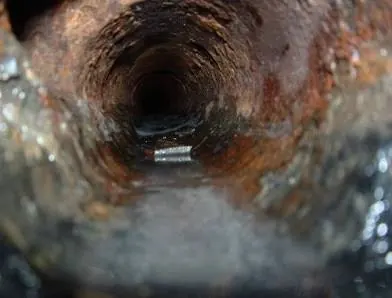
A camera shows the interior surface along the path it can reach. It may document deposits, roughness, cracks, offsets, roots, standing water, open joints or a transition to another material. It cannot see the outside of the pipe, measure every wall thickness, reveal every buried utility or prove the remaining life of material that looks serviceable. A blocked view or submerged lens also limits what can be concluded.
Electronic locating can connect a camera position to the property, but the signal can be influenced by depth, reinforcement, nearby metal and site conditions. Mark the route as field evidence and state the expected accuracy. Before excavation, follow applicable utility-locate procedures and identify private lines that a public locate may not mark. Homeowners should not dig, cut concrete or open piping as a diagnostic step.
Evidence must be organized into a written scope. That scope should identify observed conditions, unobserved sections, proposed replacement limits, retained pipe, material transitions, branch connections, access, testing, inspection milestones, backfill and restoration responsibilities. Clear uncertainty is safer than false precision.
What changes the plan for cast iron sewer replacement when cleanouts are missing
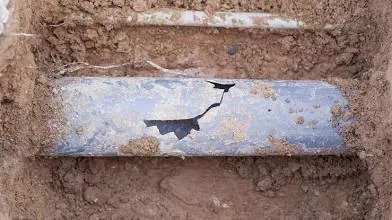
When a property has no usable cleanout, even the first inspection can be harder. The team must identify a safe access point, explain what the camera can reach, and decide whether future service access belongs in the replacement scope. The first planning meeting should focus on what is known, what is assumed and which unknowns could change the work after access is created.
- Confirm whether a cleanout is absent, buried, inaccessible or simply not yet located.
- Do not force inspection equipment through an unsuitable fixture or opening.
- Record the camera entry point because distance readings begin there.
- Consider future directional access when deciding whether a new cleanout belongs in the scope.
Route, grade and branch elevations must be considered together. A proposed path can appear shorter on a sketch yet fail to provide workable slope or reconnections. The downstream tie-in also matters: a new section must connect to a suitable point, and the scope should identify the material and condition expected at that transition.
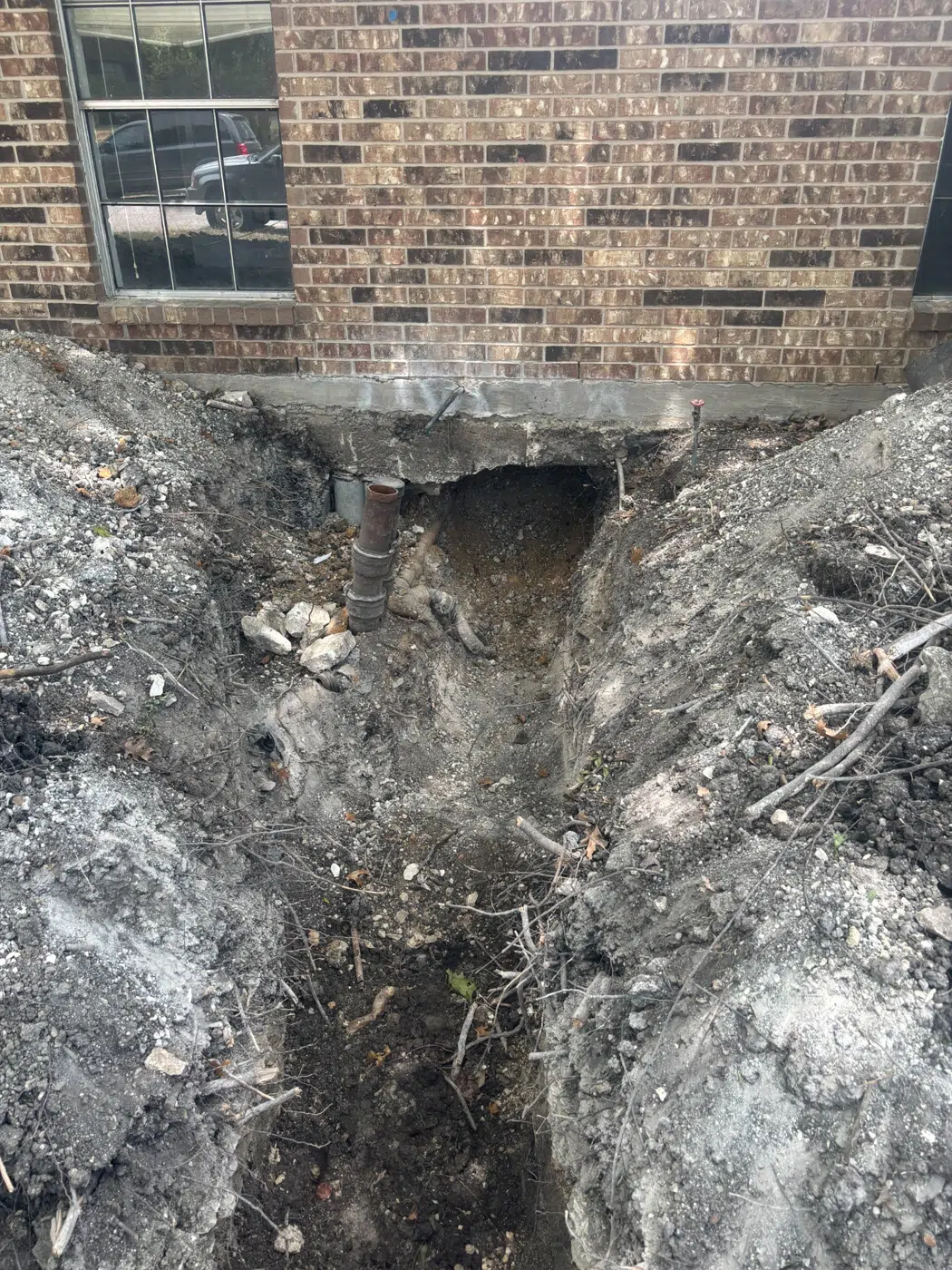
Access planning is not only about reaching the pipe. It includes worker safety, soil and debris movement, protection of occupied spaces, dust or water control, inspection access and restoration. A method that looks less disruptive in one category can shift work into another category. Complete comparisons make those tradeoffs visible.
When structural components, post-tension systems, gas piping, electrical circuits or other hazards may be present, qualified field evaluation is required. The plumbing plan should not make unsupported structural claims. Responsibilities for specialized locating, engineering or finish work should be assigned before work begins.
Compare replacement and repair methods in context
No method is universally best. The following table is a screening tool, not a recommendation for a property that has not been inspected.
| Method | When it may fit | When it may not fit | Important limitations |
|---|---|---|---|
| Targeted repair | A well-located isolated defect with serviceable adjoining pipe | Repeated defects or broad deterioration | Leaves retained sections in service and requires defined transition points |
| Through-slab access | Direct access is practical and interior restoration is manageable | Structural or finish constraints make openings unsuitable | Requires safe opening limits, dust control, testing and restoration scope |
| Under-slab tunneling | Exterior access and soil conditions support a controlled approach | Depth, access, utilities or soil stability create unacceptable constraints | Needs excavation, support, inspection, backfill and restoration planning |
| Exterior reroute | Grade and branch elevations permit a new maintainable path | Downstream tie-in, property layout or elevations prevent the route | All active connections and abandoned sections must be addressed |
| Open trenching | The route is accessible from the exterior | Hardscape, structures or access restrictions dominate | Utility clearance, shoring where required, backfill and surface repair matter |
| Lining | Selected pipe geometry and condition meet the system requirements | Collapse, unsuitable grade, some offsets or connection needs control the problem | Cleaning, preparation, diameter and branch treatment require careful evaluation |
| Pipe bursting | Existing alignment and connections suit the equipment and plan | Complex branches, access pits or nearby utilities make the method unsuitable | Entry, exit, utility clearances and reconnections still require excavation |
Ask each bidder to explain why a proposed method fits the documented conditions. A label such as “trenchless” is not a complete scope. The proposal should show access points, pipe route, connection limits, testing, exclusions and restoration.
A practical planning and construction sequence
1. Document symptoms and available records
List affected fixtures, timing, prior stoppages, cleaning attempts, foundation or remodeling work and available plumbing documents. Separate what a homeowner observed from what an inspection later establishes.
2. Establish appropriate inspection access
Choose an access point that supports safe, useful camera travel. Record limitations when bends, deposits, water or a damaged section prevent a complete view.
3. Build a working route map
Combine camera distance, locating marks, visible cleanouts, material transitions, fixture groups and site measurements. Mark uncertainty instead of converting an estimate into a fact.
4. Define replacement limits and connections
Identify what is proposed for removal, what remains, every known active branch, downstream tie-in and future access. Note concealed conditions that could trigger a written scope change.
5. Coordinate permits and inspection milestones
Requirements vary by jurisdiction. Confirm the governing authority, applicable adopted rules, required tests and when work must remain exposed. Model plumbing codes are references only until compared with local adoption and amendments.
6. Install, support and test the work
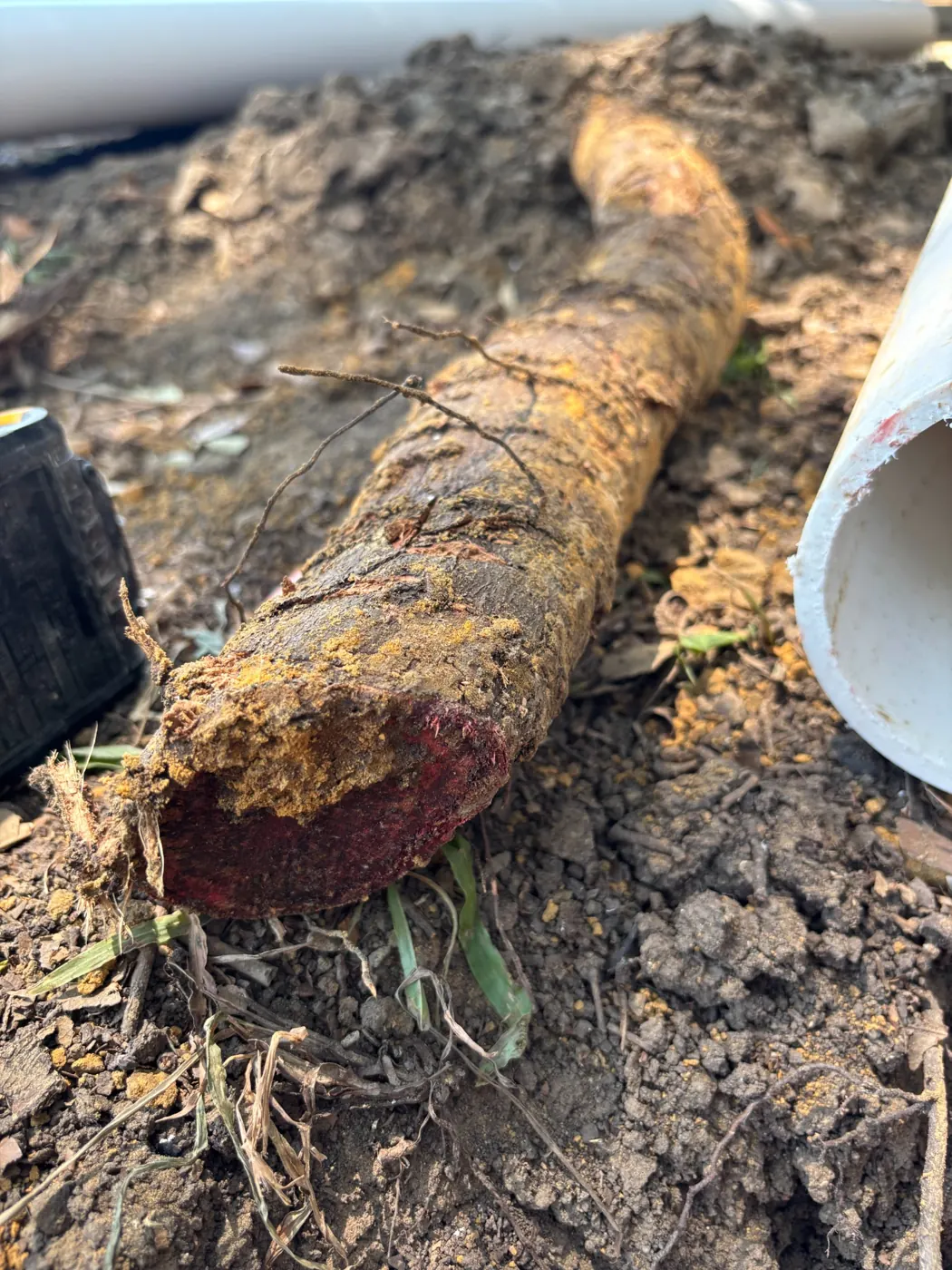
Pipe alignment, grade, fittings, bedding or support, connections and required tests should be completed according to the approved scope and applicable requirements. Important conditions should be documented before covering.
7. Backfill, restore and close out
Backfill and compaction should suit the location and restoration plan. Closeout records should identify the final route, connections, retained pipe, cleanouts, tests, inspections and finish responsibilities.
For official context, homeowners can consult the Texas State Board of Plumbing Examiners’ Master Plumber information and Texas 811. Local permit and inspection requirements still must be confirmed with the jurisdiction serving the property.
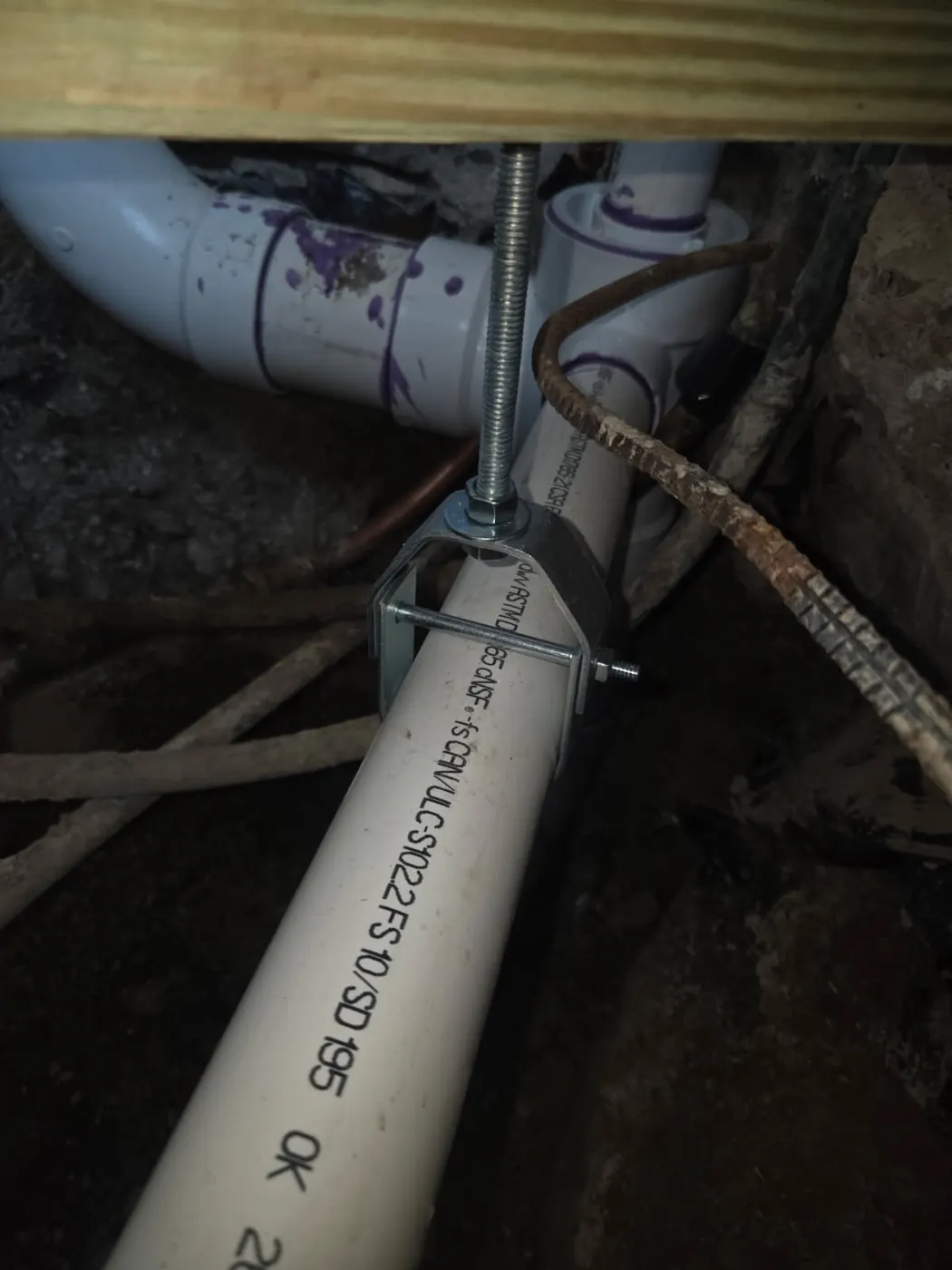
Cost factors for cast iron sewer replacement when cleanouts are missing
A responsible article cannot quote a property-specific price without an inspection and written scope. Total cost is shaped by under-slab or exterior footage, depth, access, branch count, fittings, material transitions, concrete, soil handling, utility precautions, inspection timing, backfill and restoration.
Two proposals with the same footage may describe very different work. One may include every branch reconnection, tests, inspection coordination and finish limits; another may exclude those items. Compare quantities and responsibilities rather than only the total. Ask whether retained cast iron is clearly identified and whether access creation and closure are included.
Unknown conditions should have a written process. The agreement can identify triggers such as a concealed branch, unexpected depth, unsuitable retained pipe or structural obstruction, along with documentation and approval before scope expands. That is more useful than a vague allowance.
Property-specific pricing begins after route, access and connection assumptions are tested. A complete scope also distinguishes plumbing work from flooring, cabinetry, landscaping, irrigation, structural or engineering services. No homeowner should infer a guaranteed price from a general guide.
Service area and evidence-first authority
CISRS serves Dallas, Plano, Richardson, Garland, Allen, McKinney, Fort Worth, Las Colinas and Irving, with additional DFW cities subject to scheduling availability. City and service pages should be checked for current coverage. Every project remains property-specific.
Steven Shipler, MBA is identified by CISRS as Texas Responsible Master Plumber RMP 45825. The process starts with evidence: camera findings, locating, depth, layout, access and a written scope. Qualified team members may perform field work under appropriate supervision; this guide does not claim that every site visit is personally performed by Steven.
For more planning information, visit the CISRS Resources page and the CISRS homepage.
Frequently asked questions
How can a sewer be inspected without a cleanout?
A qualified plumber may identify another appropriate access point or propose a controlled access step. The choice depends on plumbing layout and equipment; homeowners should not remove fixtures or open piping for this purpose.
Could a cleanout be buried?
Yes. Available records, visible piping, route logic and locating may help, but the team should distinguish a suspected buried access point from a confirmed one.
Why does the camera entry point matter?
Distance on a camera counter begins at the selected access point. Recording that point helps relate footage to locating marks and avoids treating a counter reading as an absolute property coordinate.
Should a new cleanout be installed during replacement?
Often it deserves consideration, but location, direction, accessibility, grade and local requirements determine the final detail. The scope should state what future sections the cleanout is intended to serve.
Can an inspection reach every branch?
Not always. Bends, transitions, offsets, deposits, standing water and the direction of entry can limit travel or visibility. The report should disclose inaccessible sections.
Does a missing cleanout prove the sewer is old or defective?
No. It is an access limitation, not a condition diagnosis. Replacement decisions still depend on actual pipe findings, system performance and the practical repair options.
What should be in the estimate?
Include the inspection access assumption, any access creation, route evidence, replacement limits, new cleanout detail, testing, inspections, backfill and restoration.
What affects cost?
Creating safe access, locating, excavation depth, branch connections, pipe condition, site constraints and restoration all influence the final price.
Ready to Find Out What Is Happening Beneath Your Home?
Start with evidence, a defined scope and a clear explanation of inspection limits.
Free Replacement Estimate$239 Camera InspectionText 972-333-5448