Cast Iron Sewer Troughing: What It Means
October 1, 2026
North Texas homeowner guide
Cast Iron Sewer Troughing: What It Means
Cast iron sewer troughing describes material loss along the bottom of a pipe that can create a worn channel, collect debris, and complicate normal flow. This guide explains what a camera may show, what the footage cannot prove by itself, and how a property-specific scope is developed.
Guide summary
This is an educational planning guide, not a diagnosis or a report about one customer property. Inspection and field evaluation are required before selecting a method or price.
Cast iron sewer troughing: Cast iron sewer troughing begins at the pipe’s flow channel
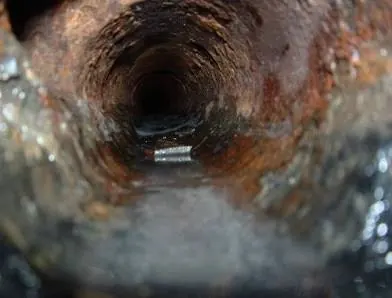
Cast iron sewer troughing is a descriptive field term for deterioration concentrated along the lower part of a drain or building sewer. Wastewater normally travels at the invert—the lowest inside surface—so that area experiences continuous wetting, deposits, abrasion, and chemical exposure. Over time, the original rounded channel may become rough, flattened, deeply worn, or locally open.
The word “troughing” does not identify one universal severity level. A shallow worn path and a bottom that has lost substantial material are not equivalent. Camera footage should be reviewed for continuity, depth of apparent loss, exposed soil or aggregate, standing water, deposits, and changes near fittings or branch connections. The important question is not whether the word appears in a report; it is what visible condition exists, where it is, and how it affects the proposed scope.
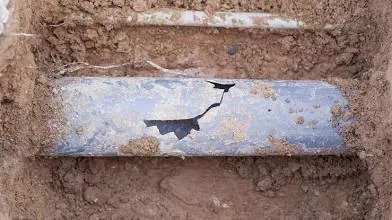
Troughing, cracking, scaling, and a belly are different observations
Heavy scale is buildup or roughness on the pipe wall. A crack is a separation in the pipe material. A belly is a low section of the installed route where water can remain. Troughing is loss or erosion of the lower pipe wall. More than one condition can exist in the same line, but each points to different questions about structure, grade, cleaning, access, and remaining serviceability.
How to read camera evidence without overclaiming
A sewer camera supplies a moving view from inside an accessible line. It can document visible corrosion, channel loss, offsets, roots, deposits, water levels, and reachable connections. It can also help establish distance from the entry point. However, distance shown by the counter is not a survey coordinate, and a camera image does not directly measure remaining wall thickness.
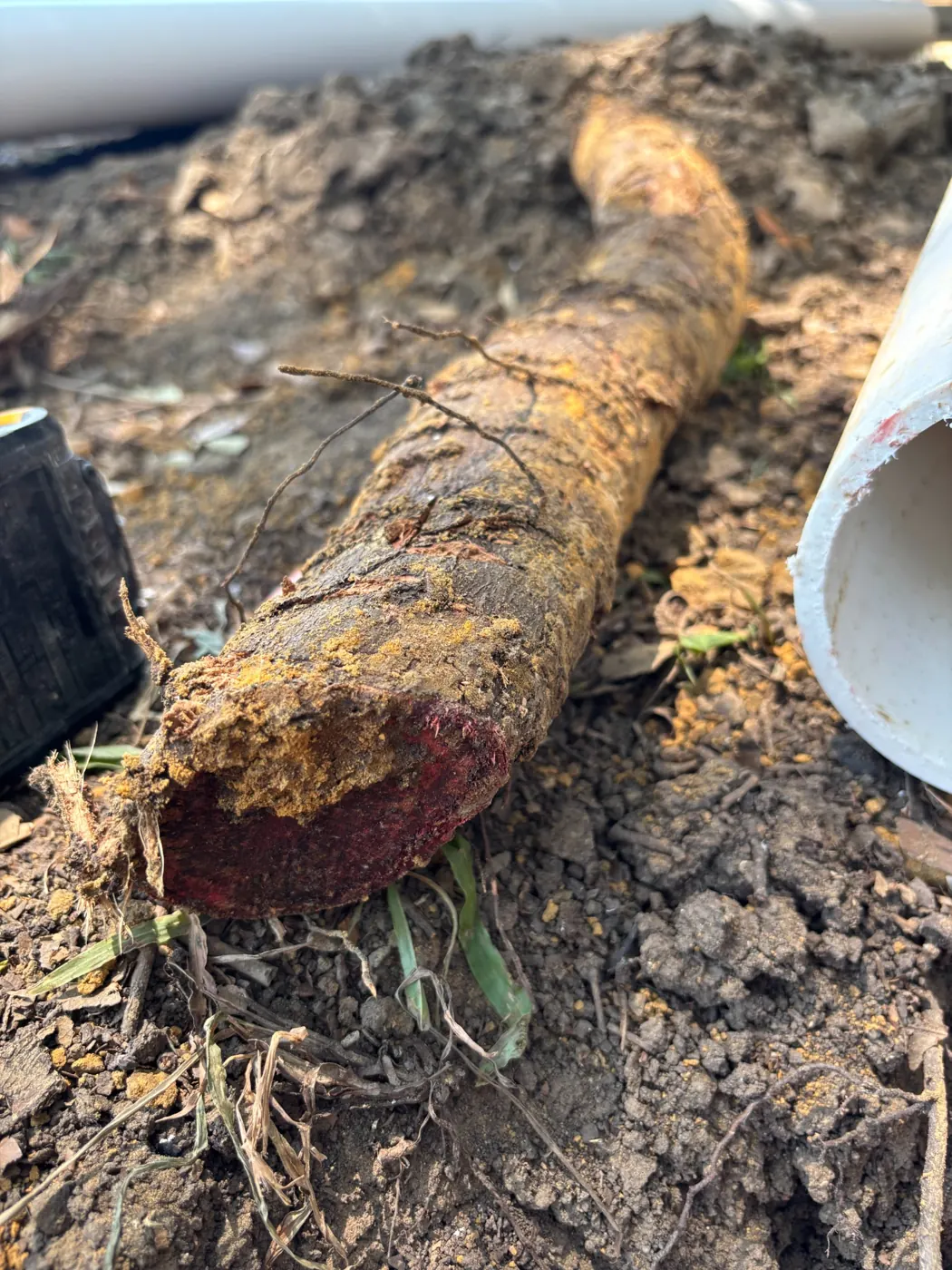
Before relying on a clip, identify the access point, direction of travel, pipe material, approximate diameter, and whether the camera reached a known downstream point. Ask whether the line was flowing, recently cleaned, or holding water. Those conditions change what can be seen. A lens riding in deposits may make the lower wall hard to evaluate; dark water can hide the invert entirely.
What a strong report should separate
A useful report distinguishes observation from interpretation. “The lower channel appears worn between these two points” is an observation tied to footage. “This section requires replacement by a specific route” is a recommendation that also depends on location, depth, branches, access, grade, and local requirements. Keeping those categories separate makes estimates easier to compare and reduces the risk that a single still image controls a major construction decision.
Recurring symptoms can support an investigation, not a diagnosis
Slow drains, repeat stoppages, odor, or backups may justify inspection, but none proves troughing. The same symptoms can come from deposits, roots, an offset joint, a localized obstruction, a venting concern, a fixture branch, or downstream conditions. Conversely, a camera may show notable material loss in a line that has not yet produced a dramatic household symptom.
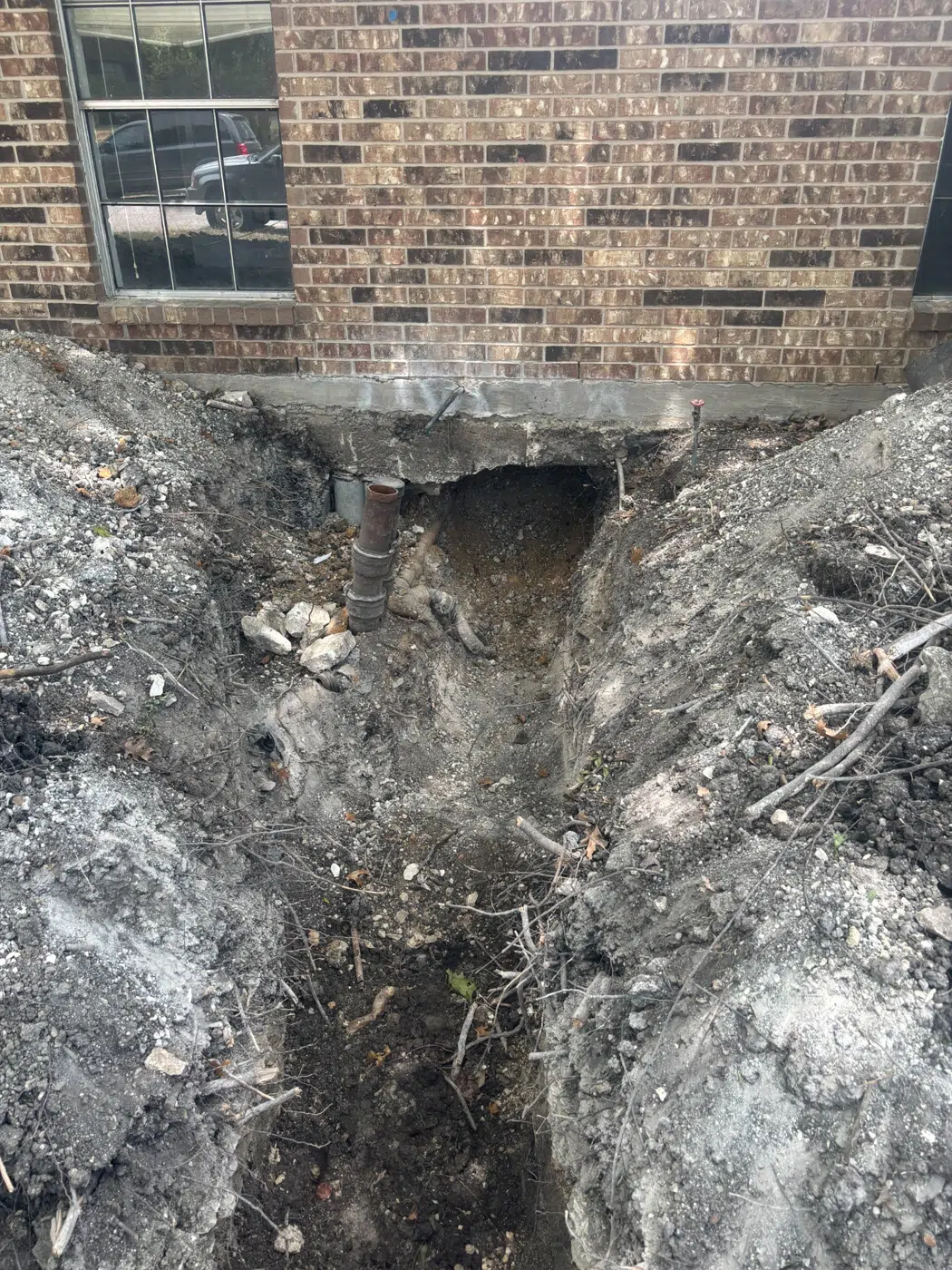
That is why the practical sequence begins with the property’s history, accessible cleanouts, a controlled camera inspection, and field locating where a finding matters. If the condition is beneath the slab, its relationship to rooms, footings, exterior walls, and branch connections changes the feasible approaches. If it is outside, utilities, driveways, trees, landscaping, and connection points may govern access.
When cleaning is useful—and when it is not the answer
Cleaning may remove deposits so the camera can see the actual pipe surface. It does not rebuild missing cast iron or correct an offset, collapse, or grade problem. Aggressive cleaning also requires professional judgment because fragile piping may respond differently than sound pipe. Homeowners should ask what cleaning is intended to accomplish, what risks were considered, and whether a follow-up recording will document the newly visible condition.
Cast iron sewer troughing and method selection
The correct response may range from monitoring or a targeted repair to replacement of a longer section. Suitability depends on pipe condition, grade, depth, access, branch connections, layout, and local requirements. Age alone is not enough to choose a method, and troughing in one reachable area does not automatically prove that every cast iron branch has the same condition.
Targeted repair
May fit a localized defect with suitable adjoining pipe and practical access. It may not fit when deterioration continues beyond the repair limits or when several connected defects remain.
Tunnel or slab access
May provide direct access to under-slab pipe. Structural conditions, route, soil, work space, and restoration responsibilities must be evaluated; neither method is universally less disruptive.
Exterior reroute or trench
May reduce interior access when elevations and branch connections allow. It may not fit where grade, utilities, tight setbacks, or interior fixtures prevent a workable outside route.
Lining or pipe bursting
These are condition- and product-specific methods. Existing geometry, branches, host-pipe continuity, access, and local acceptance matter. The ICC’s model-code discussion of relining illustrates why recorded surveys and method-specific documentation matter; local adoption must still be confirmed.
Cost factors are tied to the actual work boundary
There is no responsible way to price cast iron sewer troughing from a photograph alone. The largest cost drivers can include the footage selected for work, depth, under-slab extent, number of branch connections, access, concrete or flooring, exterior excavation, utility conflicts, permits, inspections, backfill, and restoration. A small visible defect can be expensive to reach, while a longer exterior section may have comparatively straightforward access.
Ask each proposal to identify the beginning and end of the scope, the branches included, the material and approximate size, the access plan, the testing or inspection steps, and the surfaces included in restoration. If an estimate assumes a route or depth that has not been located, label that assumption. Differences in scope often explain price differences more clearly than a single total.
Do not confuse a diagnostic fee with construction pricing
CISRS currently advertises a $239 sewer camera inspection and a free cast iron sewer replacement estimate. The camera service documents accessible internal conditions; the estimate addresses a proposed construction scope. Confirm which service is scheduled and what deliverables are included. Property-specific construction pricing requires inspection and a written scope.
Build a decision record before approving work
Keep the full video, not only a screenshot. Pair important footage with a written note showing the access point, direction, distance, and located area. Ask which portions were not visible and whether branches were separately inspected. Then compare the recommendation with the mapped route and the work boundary in the estimate.
If the recommendation changes after excavation or additional access, request a written change that explains the new evidence. Concealed conditions can change a project, but the record should show why the scope changed and what the revised price covers. Avoid language that promises a “permanent fix,” “zero damage,” or universal “no digging.”
Homeowners should not enter excavations or attempt hazardous under-slab work. OSHA’s trenching and excavation guidance explains that cave-ins are a primary hazard and that protective requirements apply to the work. Utility locating through Texas 811 is also part of responsible excavation planning; it does not replace private-line locating or a contractor’s site evaluation.
Homeowner checklist for a troughing recommendation
Before approving work, ask for the full recording and a written description of the visible condition. The record should identify the camera entry point, travel direction, approximate distance, pipe material, and the beginning and end of the concerning area. Ask whether the bottom of the pipe was continuously visible or hidden by water, debris, scale, or the camera head.
Next, ask how the finding was located at the surface and what level of accuracy is reasonable. A camera counter, sonde location, estimated depth, and measurement from a wall answer different questions. If a proposed repair begins or ends where the footage is uncertain, request an explanation of how the boundary was selected.
Questions that turn a diagnosis into a scope
- Is deterioration localized, repeated, or continuous through the inspected section?
- What known branches join the affected run, and were those branches inspected?
- Does the footage show standing water, an offset, cracking, roots, or a change in pipe shape in addition to channel loss?
- What existing pipe remains active after the proposed work?
- Which access method is assumed, and what condition could cause that approach to change?
- What testing, camera documentation, permit, inspection, backfill, concrete, and finish restoration are included?
Finally, keep uncertainty visible. If the camera could not pass a point or the invert stayed submerged, the report should say so. A careful scope can include a contingency for concealed conditions without pretending that inaccessible piping has already been examined. That approach gives the homeowner a better basis for comparing proposals and makes later changes easier to understand.
Frequently asked questions
Does troughing mean the pipe has collapsed?
No. Troughing describes deterioration along the lower channel. A collapse is a more severe loss of shape or continuity. Camera coverage, visible structure, flow conditions, locating, and access determine what is known.
Can a camera measure cast iron wall thickness?
A standard sewer camera shows visible interior conditions but does not directly measure remaining wall thickness. Reports should avoid turning image appearance into an unsupported measurement.
Will cleaning fix troughing?
Cleaning may remove deposits and improve visibility. It does not replace missing metal or correct an offset, collapse, or grade problem.
Does every trough require full replacement?
No universal rule applies. Extent, adjoining pipe condition, grade, access, branches, layout, and local requirements guide repair-versus-replacement decisions.
Can lining cover a troughed section?
Possibly in some systems, but suitability depends on host-pipe continuity, shape, branches, preparation, product approval, and local acceptance. It cannot be assumed from one image.
How is a finding located beneath a slab?
Technicians may combine camera distance, an electronic transmitter or sonde, surface locating, depth estimates, cleanouts, and property layout. Each method has limitations, so records should state what was actually confirmed.
Why do estimates for the same footage differ?
Access method, branch reconnections, depth, concrete, finish restoration, permitting, inspection, excavation, backfill, and included verification can vary. Compare written scope line by line.
Is license 45825 current?
The official Texas public record was checked October 1, 2026 and listed Steven Shipler’s Master Plumber license 45825 as current through September 30, 2027, with the Responsible Master Plumber endorsement. Recheck the official record when scheduling.
CISRS service areas
City pages provide local service information. Project scope, permit requirements, and scheduling must be confirmed for the property.
Additional DFW cities may be served by scheduling availability.
Ready to Find Out What Is Happening Beneath Your Home?
Start with the evidence and a written scope.